Website Review · real field-test example
See the issue. Know what to change.
Here is one finding from a real website: the screen we captured, the evidence behind the recommendation and instructions you can hand to your coding agent.
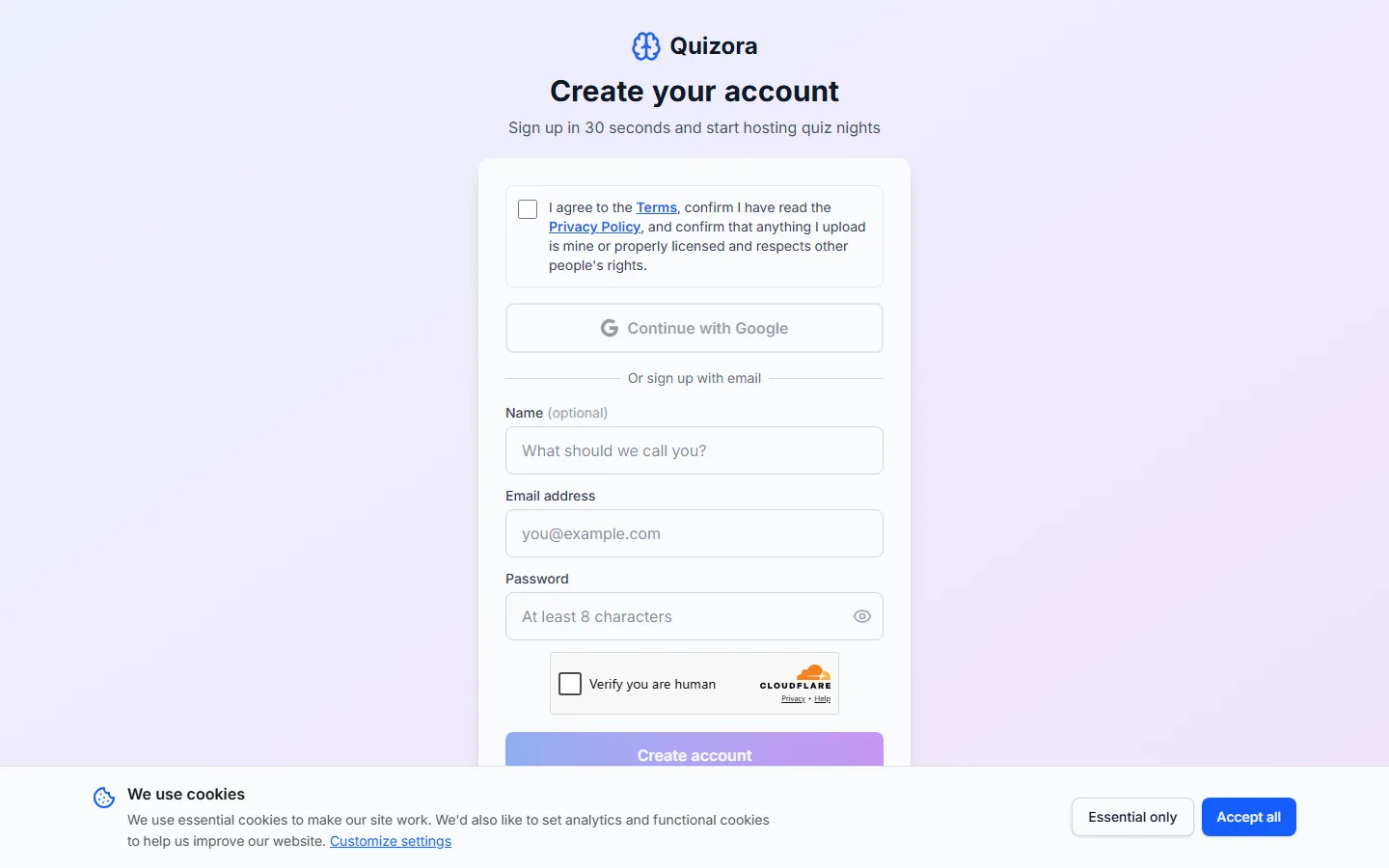
Quizora public signup page · Desktop capture, 9 September 2026. Detail crop of the same published capture. The outline is an annotation; the page pixels are unchanged.
Make “optional” easy to read.
The field test recorded 2.48:1 contrast for this normal-size label. The applicable WCAG AA text-contrast threshold is 4.5:1. The measurement comes from the recorded check, not an estimate from these pixels.
Read the contrast criterion and its exceptions ↗2. A concrete change to try
Suggested text treatment · illustration
Name (optional)
Keep the wording and layout. Darken the label against its real background, then recheck its contrast.
This is an editorial illustration of the recommendation—not a worker-generated redesign or a capture of an implemented fix. No improvement in signups has been measured.
3. Hand it off, then verify
The instructions include the evidence, what to preserve and how to check the result. Reproduce this historical issue before changing the current website.
Read the fix instructions and verification steps
Review the Quizora public signup form's Name (optional) label. Historical evidence: the PageLens field test on 9 September 2026 recorded 2.48:1 contrast for the normal-size 'optional' text. Reproduce against the current page before making a change; the screenshot is not a new contrast measurement. Use a darker text token so the label reaches at least 4.5:1 against its actual background. Preserve the exact wording, optional-field meaning, associated label, form behavior, brand and surrounding layout. Do not infer that disabled controls need the same treatment. Verify computed foreground/background colors in the browser, including opacity and inherited styles. Check desktop, mobile, zoom and focus/error states. Repeat the automated contrast check and inspect the rendered label. Report the files changed and before/after measurements. A passing contrast check does not establish full accessibility compliance or increased signup conversion.
What would a review find on your website?
Start with a free public-page check. The $9 USD Website Review adds desktop and mobile evidence, prioritized fixes, exports and one verification re-scan. Findings depend on your site; a review does not guarantee that more problems exist.
No signup or card for the free check. An account is required for the paid review. One-time USD price; no subscription.
This excerpt illustrates the evidence-to-fix workflow. The original field test covered public routes only; it did not sign in, submit the signup form or establish full accessibility compliance.
Loading the additional full-report example…